 Industrials Limited
Jun 02, 2026
Demountable Steel Partitioning vs Stud Walls: Which Is Best for an Industrial Warehouse?
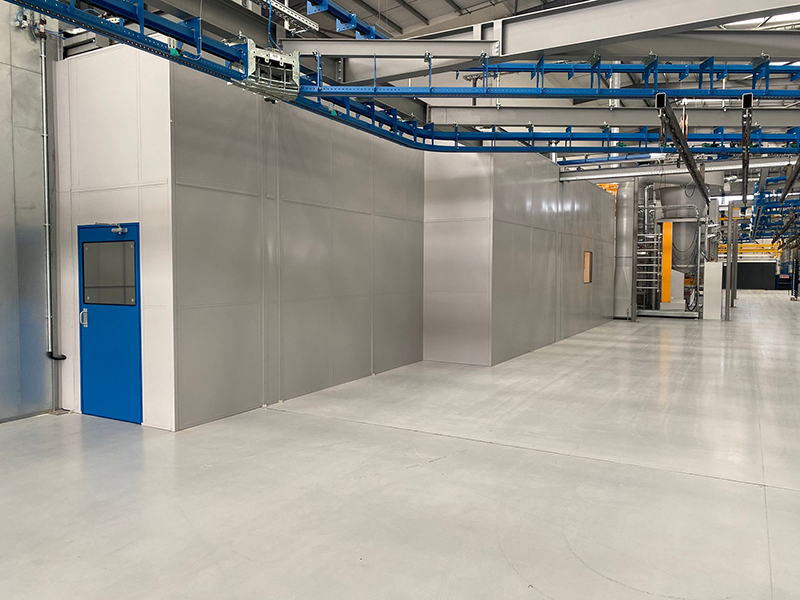
In both commercial and industrial environments, partitioning systems play a key role in shaping how space is used. Whether dividing warehouse floors, creating office areas, or improving safety, the right solution can significantly impact efficiency and flexibility.
Two of the most common approaches are modular partitioning and traditional steel partitioning systems. While both serve similar purposes, they differ in installation, adaptability, and long-term use.
Understanding the differences between these systems helps businesses choose the most effective solution for their space, whether they require a permanent structure or a more flexible, reconfigurable layout.
What Is Demountable Partitioning?
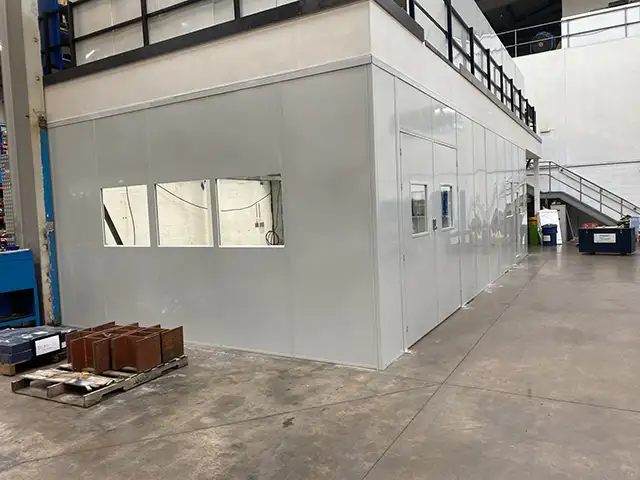
Demountable partitioning is a modular system used to create internal walls and enclosed areas. In an industrial setting, these systems are often made from steel panels and supporting framework, making them well suited to warehouses, factories, workshops and production spaces.
A demountable partition system can be used to create:
- Warehouse offices
- Secure storage areas
- Staff rooms
- Production zones
- Machine enclosures
- Goods-in or dispatch areas
- Internal corridors
- Dedicated workspaces
One of the main advantages of demountable partitioning is that it can often be adapted, moved or reconfigured if your layout changes. This makes it especially useful for businesses that need a practical solution now, but may need their internal space to evolve in the future.
What Are Stud Walls?
Stud walls are usually built using a timber or metal frame, with plasterboard fixed to either side. They are then finished with jointing, plastering, and decoration. In commercial and industrial settings, they may also be combined with a metal stud drop ceiling to create enclosed office areas or internal rooms.
Stud walls are a familiar and widely used option, particularly in offices or areas where a smooth plastered finish is required. However, in a warehouse environment, they can be less flexible and less resistant to damage than steel demountable partitions.
Once installed, a stud wall is generally treated as a permanent structure. If it needs to be moved, it usually has to be demolished and rebuilt, which can create mess, downtime and additional cost.
Durability in a Warehouse Environment
Durability is one of the biggest factors to consider in an industrial warehouse. These environments often involve forklifts, pallet trucks, machinery, racking, stock movement and frequent foot traffic. Internal walls may be exposed to knocks, scrapes and general wear over time.
Demountable steel partitioning is designed for this type of environment. Steel panels are generally more robust than plasterboard and better suited to areas where impact resistance matters. This makes demountable partitioning a strong choice for operational warehouse areas, production spaces and storage zones.
Stud walls can work well in quieter areas, but plasterboard is more likely to suffer dents, cracks or surface damage if exposed to warehouse activity.
Flexibility and Layout Changes
Warehouse layouts often change as businesses grow, introduce new equipment, or adjust workflows. A demountable partition system is useful because it can often be adapted, extended or relocated. Stud walls are more permanent and usually need to be demolished and rebuilt if the layout changes.
For warehouses that may need future flexibility, demountable partitioning is usually the better option.
Installation and Disruption
Demountable partitioning is often quicker and cleaner to install than traditional stud walls because it uses modular components and usually involves less finishing work. Stud walls can take longer, especially where plastering, sanding, decorating or a metal stud drop ceiling is required. In a live warehouse, this can create more disruption.
So, Which Option Is Best?
Stud walls may be suitable for:
- Permanent internal rooms
- Low-impact office areas
- Spaces where a plastered finish is required
- Areas unlikely to change in the future
Demountable partitioning may be better suited for:
- Industrial warehouses
- Factory environments
- Busy operational areas
- Warehouse offices
- Secure storage zones
- Production spaces
- Businesses that may need future layout changes
For most industrial warehouse environments, demountable partitioning is the more practical option because it offers durability, flexibility, and long-term value.
Speak to JRC Industrials
Choosing between demountable partitioning and stud walls depends on how your warehouse is used and whether the space may need to change in the future.
JRC Industrials can help you choose the right solution, whether you need demountable office partitions, a full demountable partition system, demountable suspended ceilings or advice on the most suitable internal layout for your site.